RI Gender in Schools, Queering our schools and Woke Read Alouds: They, She, He, Easy as ABC- blog post
While reading the article "RI Gender in School" one thing I noticed and rather appreciated was the breakdown of some of the used terminology. I appreciated this aspect of their post because coming from a background with a family that was not educated about these terms I got to learn. I didn't read the article very in depth but while skimming I began to think back to the guest speaker Syed Menebhi and his own PowerPoint he spoke about. It really overall opened my eyes (somehow even wider than they already are..) to just how much people who are just being themselves or trying to reach that point go through. It's nice that the article also mentions that at the secondary level it is primarily unnecessary for staff, faculty, or administration to notify a child's parent if they wish to possibly present themselves in a different way. I agree and believe that it may cause more harm to a child than good. Thinking back to my own experiences in middle school, a lot of my friends were queer and would occasionally go by a different pronoun or a different name. Although, during this time it was not very common for students to ask of this and as seen as rather "taboo" in my school yet a lot of my classmates respected my friends wishes and used proper pronouns and preferred names. There was actually another instance in middle school where another one of my classmates and friend was asking to go by another name but not around their parents which to some extent the school followed this ask. I honestly cannot remember if the school respected this for the duration of the students stay or not.
Moving on to the next article, "Queering Out Schools" by The Editors of Rethinking Schools the very first think that stuck out to me was the photo on the very first page. I like that there was a woman with her hair just out and it felt very validating to see although it's not the point of the passage. Continuing, reading this article was very bittersweet(?) in a way because it is very sad that Sasha experienced such a horrible crime done to her but it was rather thoughtful of the father to try to look at it from a different perspective. Sadly, I have heard lots of jokes around the LGBTQ+ community and lots of people using the term "gay" as an insult which naturally would make some people nervous or scared to either identify with them terms or use them.
One question I did wonder though was, would humanity and the norms be different if we didn't separate clothes by gender and what they ACTUALLY are. For example, in a store instead of seeing a big ol' women's department or men's department its simply just sections labeled long sleeve shirts, dress shirts, dresses, etc etc. Cause I feel like who are WE to put a gender to CLOTHING! It's clothing, and can be worn by just about anybody!!
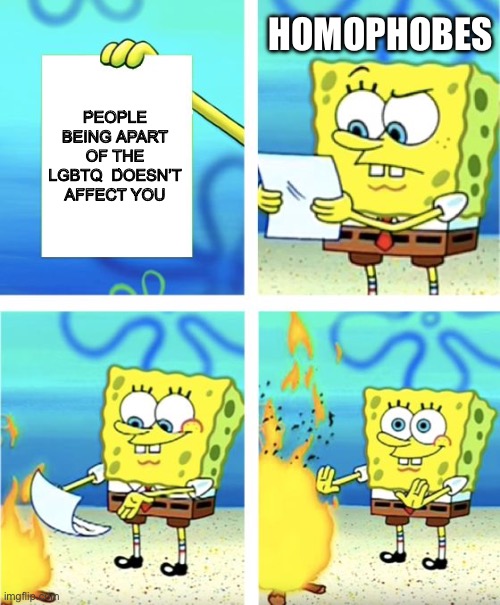
In conclusion, genuinely why can't everyone just accept everyone. Like its just not a hard concept to grasp but some people act like its their last day on earth if they someone isn't exactly like them. All that people need to be focusing their time and energy on is how they can be the best they can be and achieve whatever goals they have rather than being up in everyone else's business!


