Monday, December 8, 2025

Blog Post #12

 1-) Watching the film in class precious knowledge is definitely up there. I feel like it really opened my eyes to how positive it can be for people to learn about their culture and how empowering it may be for them. Also it made me realize that sometimes you really do need to take a stand for something you believe strongly for. 

2-) The timeline activity was also a very positive experience. I enjoyed that we had to do our own research and then educate others on it. It helped make for some very educational conversations and paved the way for lots of questions to be asked and history to be learned.

3-) The Neurodivergent article and video that we watched was extremely informational as well educational. I was learning new terms and learning more in depth about mental health and it was great. I feel like the video about it we watched was put together very well and was easy to follow along to as well. 


Monday, November 10, 2025

Blog Post #11 week of 11/10/25

 RI Gender in Schools, Queering our schools and Woke Read Alouds: They, She, He, Easy as ABC- blog post


While reading the article "RI Gender in School" one thing I noticed and rather appreciated was the breakdown of some of the used terminology. I appreciated this aspect of their post because coming from a background with a family that was not educated about these terms I got to learn. I didn't read the article very in depth but while skimming I began to think back to the guest speaker Syed Menebhi and his own PowerPoint he spoke about. It really overall opened my eyes (somehow even wider than they already are..) to just how much people who are just being themselves or trying to reach that point go through. It's nice that the article also mentions that at the secondary level it is primarily unnecessary for staff, faculty, or administration to notify a child's parent if they wish to possibly present themselves in a different way. I agree and believe that it may cause more harm to a child than good. Thinking back to my own experiences in middle school, a lot of my friends were queer and would occasionally go by a different pronoun or a different name. Although, during this time it was not very common for students to ask of this and as seen as rather "taboo" in my school yet a lot of my classmates respected my friends wishes and used proper pronouns and preferred names. There was actually another instance in middle school where another one of my classmates and friend was asking to go by another name but not around their parents which to some extent the school followed this ask. I honestly cannot remember if the school respected this for the duration of the students stay or not.

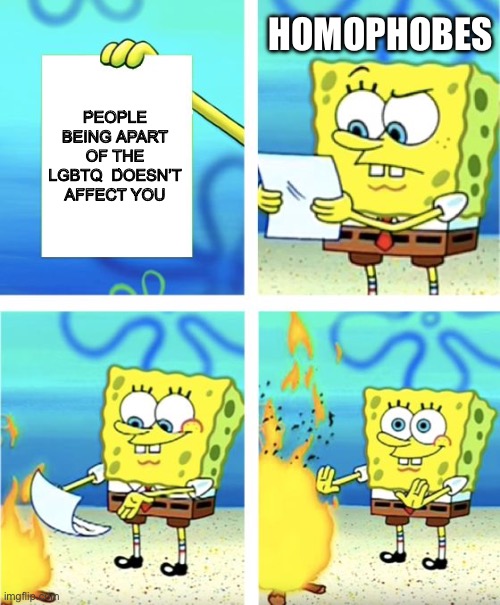
Moving on to the next article, "Queering Out Schools" by The Editors of Rethinking Schools the very first think that stuck out to me was the photo on the very first page. I like that there was a woman with her hair just out and it felt very validating to see although it's not the point of the passage. Continuing, reading this article was very bittersweet(?) in a way because it is very sad that Sasha experienced such a horrible crime done to her but it was rather thoughtful of the father to try to look at it from a different perspective. Sadly, I have heard lots of jokes around the LGBTQ+ community and lots of people using the term "gay" as an insult which naturally would make some people nervous or scared to either identify with them terms or use them. 

One question I did wonder though was, would humanity and the norms be different if we didn't separate clothes by gender and what they ACTUALLY are. For example, in a store instead of seeing a big ol' women's department or men's department its simply just sections labeled long sleeve shirts, dress shirts, dresses, etc etc. Cause I feel like who are WE to put a gender to CLOTHING! It's clothing, and can be worn by just about anybody!!

In conclusion, genuinely why can't everyone just accept everyone. Like its just not a hard concept to grasp but some people act like its their last day on earth if they someone isn't exactly like them. All that people need to be focusing their time and energy on is how they can be the best they can be and achieve whatever goals they have rather than being up in everyone else's business!

Tuesday, November 4, 2025

What is Neurodiversity? Blog post for week of 11/5

              "What is Neurodiversity?" by Child Mind Institute


    The article “What Is Neurodiversity?” by Child Mind Institute, explains that some people’s brains just work differently, and that this is a normal part of human diversity. The article says that having autism, ADHD, or a learning disability doesn’t make someone “broken” but rather it just means their brain may work in a way that school systems don’t always understand or support. The article also points out that a lot of the problems that neurodivergent students face sometimes come from the environment and not from the students themselves. The article's main point seems to be that the world and schools especially, are often set up only for “typical” brains.

    I feel like the readings from Lisa Delpit’s we've read could connect well to this idea of the article. Delpit writes about how the school system is often set up for one kind of student which tends to be usually white, middle-class, and already familiar with the “rules” of school. Delpit suggests that students of color, or students who come from different cultures, are often seen as having problems, when really it’s the school that has a problem for not including them. Delpit talks a lot about how teachers should value students’ backgrounds and teach them what they need to succeed, instead of blaming them for being “different.”

    The connection that I feel the two share is that the neurodiversity article and Delpit’s argument say that problems don’t come from the child and they come from the way schools are built. A child might be Black, or autistic, or bilingual, and still be capable and smart. BUT, if the classroom only allows one kind of behavior, one way of thinking, or one form of communication, then the child will look like the problem when in reality its the classroom that needs to change.

    Both Delpit and the neurodiversity article offer us as future educators and teachers to ask ourselves just how we can make this space work for all kinds of learners instead of trying to “fix” the student. Both promote changing the environment so that EVERYONE has a chance to succeed.

Tuesday, October 21, 2025

Finn Literacy with an Attitude- thoughts

                                                     Finn Literacy with an Attitude- Patrick J Finn


    While reading the article, “Literacy with an Attitude”  by Patrick Finn, I was able to draw so many connections from not only my own experience while in my k-12 classes but also from doing my school observations of classrooms. One part that really stood out to me while I was reading was in chapter 2  on page 11 at the bottom of the page when a fifth grade teacher said, “They’re lazy. I hate to categorize them but they’re lazy.” Talking about the students. That just really baffled me because as a future educator I can’t even begin to imagine myself calling any student lazy no matter what. Right above that passage though, there is another passage that stood out which is when the author is describing Anyon’s experience while observing these schools and mentions that Anyon only two times did Anyon hear a teacher say “please” to a student in a non-sarcastic tone. This made me think about my most recent school field observation at an elementary school in North Providence. The teacher while working with a group of students ended up singling out a student who appeared to either have a possible learning disability or a possible language barrier. The teacher would talk into her phone (to what seemed to be a translator) and the student would then read the phone. What I noticed though was the teachers use of tone and how she came off very aggressive and condescending while speaking into her phone but it may not have translated that way to the student but myself and their classmates noticed it. 

    The situation I mentioned prior about the student and teacher, could be seen as an attempt at being asset based but it came off extremely deficit based. I would say it came off deficit based because the tone of  which the teacher spoke was not genuine nor inviting but on the other hand but he teacher using a device to try and communicate with the student that is asset based in trying to meet the student where they are at. Also, the text had mentioned different social classes and gave examples from them and how the students may be. One thing I really didn’t enjoy reading within this text though was when they had mentioned that some students would be placed in classes that they were not actually performing at just because of their behavior which is just insane because it’s not fair nor right to sum all the work a student does to their behavior. 

    A question I bring to the table for my classmates is do they think that the teacher was using a more asset or deficit based scenario in the classroom. Also, I want to ask my classmates how would they go about helping a student who may have a learning disability or a language barrier. Do you think that the teacher did a good job at enhancing the students’ education by using the phone/translator app? 


Monday, October 6, 2025

What to Look for in a Classroom- Alfie Kohn- thoughts

             What to Look for in a Classroom- Alfie Kohn- input


    While reading through the article, I drew some connections from all around. It made me think back to our discussion in class about the behavior charts and about the popsicle stick methods that some teachers incorporate into their classrooms. Seeing that these strategies were on the ‘reasons to worry’ side was extremely interesting because that’s what students in my class thought as well! 

    Another thing that I found interesting was the classroom seating being on there and I was able to connect that section with my first day at my placement school. While being there, I saw that there were no “assigned seats” per say, but different areas around the classroom where students could choose to sit. These seating choices would have a maximum capacity for who could sit there (like 2 people max etc) and it seems to give the kids a lot of choice in their classroom which I always think is good. 1 overall enjoyed reading the article because it gives me something to think about when I encounter new places and what I could be taking notice of while out and about. 

    In the video, Irvine says, “I think the first thing to remember is that students are not mere representatives of a cultural ethnic group. First and foremost, they are individual students, who have individual needs and interests, etc” (time 3.16) I think this ideology is so important to not just know but make sure its being actively used. Students are more than just their race or their culture, above all they are human and an individual. Surely, their race and culture may play a big role to some which is fine but beginning off you must know that they are individuals. I really liked how that was mentioned and brought to light.


Sunday, September 28, 2025

Delpit, The Silenced Dialogue- Response

                       Delpit, The Silenced Monologue- review


    While reading I just kept getting more and more shocked. Lots of phrases and experiences stuck out to me like and left me wanting to read more. Quotes that stuck out to me the most are: "I don't know if they really don't listen or if they just don't believe you.....now i'm just in it for a grade" (Pg 1). "They listen but they don't hear you" (Pg 1). " The more I try to explain, they just look and nod, just keер looking and nodding. They don't really hear me" (Pg 2). The last quote I gave especially made me think back to my own experiences and realize just how many times I personally have tried to explain situations where I may have been upset or felt differently about something and was just left with the person not really caring or just nodding. Back then I never really realized just how much we weren't allowed to talk about differences or really embrace cultures. For example, I once went to school with a head wrap on and was told by the teacher that it "wasn't allowed" which is just absolutely insane looking back. 

    My sister has experienced this more than me as she would usually wear her hair out in a puff or an Afro in high school and was mocked by students and the teachers NEVER called them out about it. We did end up changing schools but the fact that it took US leaving in order for it to stop is once again.. insane. Delpit seems to talk about teachers needing to embrace the differences among all students while also teaching other students to be respectful. It seems extremely important for teachers to not only know how to be respectful of students' different cultures and also allowing a space for them and others to learn from each other! Overall, I think if we all were able to just educate each other then a lot would change but I do question if we will ever be able to reach that point. 

Blog Post #12

 1-) Watching the film in class precious knowledge is definitely up there. I feel like it really opened my eyes to how positive it can be fo...